I try to make my historical fiction as authentic and accurate as possible, so the reader can be immersed in the story secure in the knowledge that what they are reading is grounded in real events and places.
One of the best ways to achieve this outcome is to walk in the shoes of my fictional characters. That's why I often visit the locations that feature in my books.
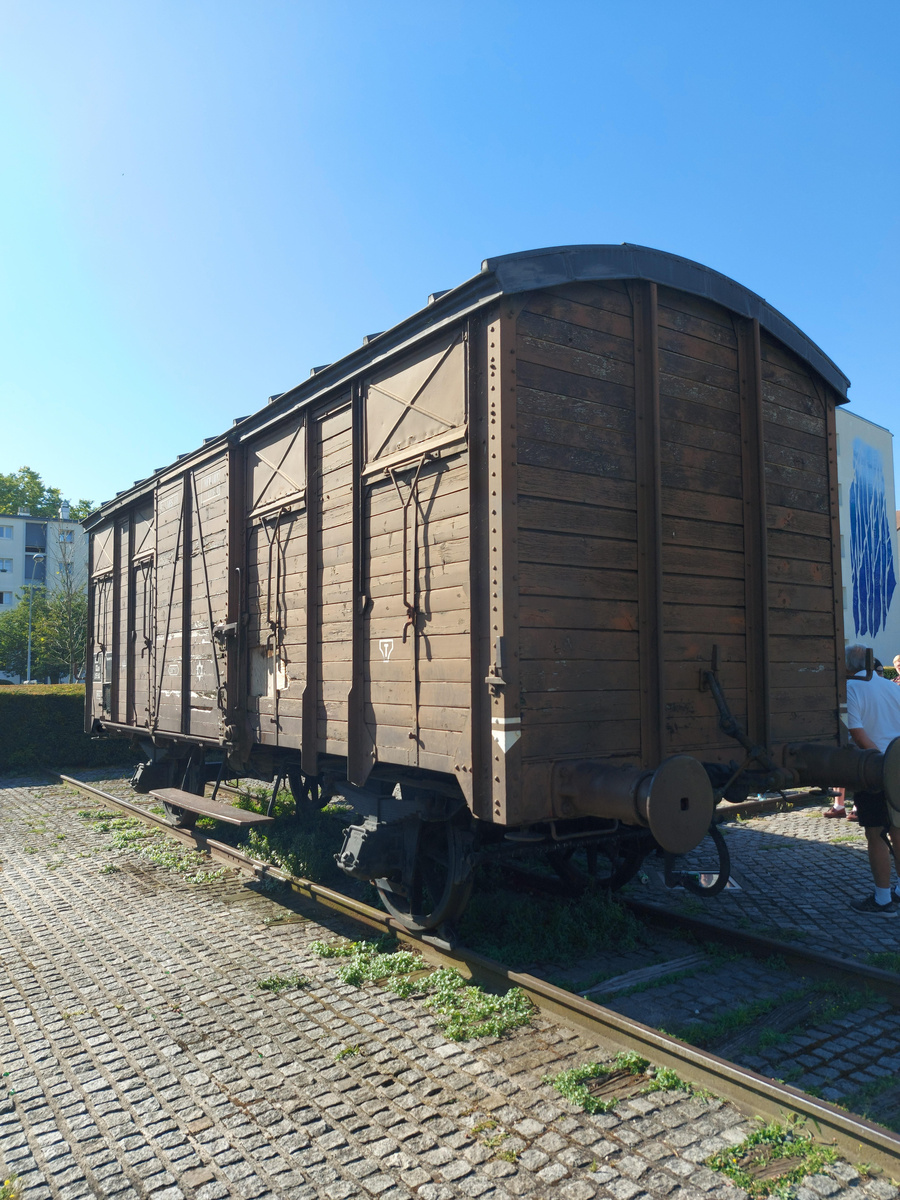
To illustrate the point, here is a picture of one of the cattle trucks used to transport Jews to the various extermination camps in eastern Europe from occupied Paris. The cattle truck is an exhibit outside a block of flats in Drancy, a suburb of Paris. The flats had only just been built at the start of the second world war and were yet to be inhabitated. The authorities commandeered them to house the Jews rounded up in Paris by the French police in 1942 before they were taken down the road to Bobigny station, where they were loaded into the cattle trucks for onward transporation to places like Auschwitz and Sorbidor, where they would meet an almost certain death.
The flats feature in a chapter in Crossing the Lines, when Antoine goes in search of his handler in the French secret service, Daniel Gallopin, who has been betrayed by his boss, Paul Bernard because he is Jewish. They track him down to one of the cattle trucks in Bobigny when they......(you will have to read the book to find out what happens!)
I visited Drancy and Bobigny in July 2025 as part of an organised tour (shout out to Leger Battlefields Tours). Apart from the sights of the cattle trucks and the station at Bobigny, which has been lovingly preserved as it was in the 1940s, what struck me most from the visit was the fact that people were living in the flats at Drancy, seemingly oblivious of its dark history. I'm not sure whether I should be depressed or uplifted by that?